Network Examples
Two versions of ATP are used in these examples. The script atp.py chooses the correct version based on the example’s case number.
runtpgig is the upsized GNU version for large cases. The WECC240 example requires it.
mytpbig has been compiled to call gfm_gfl_ibr2.dll, the 32-bit version, at runtime. It is required for the SMIBDLL example. It also runs the other examples, except for WECC240.
The following WECC generic IBR model settings apply to the IEEE39, IEEE118, and WECC240 examples. They are not necessarily optimized for best dynamic performance. Updates to the dyr file settings may produce better results.
Parameter |
Value |
|---|---|
vFlag |
True |
qFlag |
True |
pqFlag |
False |
pfFlag |
False |
refFlag |
True |
vcmpFlag |
True |
frqFlag |
True |
ivplsw |
True |
pFlag |
False |
kqv |
2.0 |
kqp |
1.0 |
kqi |
0.33 |
kvp |
0.2 |
kvi |
5.0 |
kp |
0.04 |
ki |
8.0 |
kpg |
0.5 |
kig |
1.0 |
Transformer Saturation
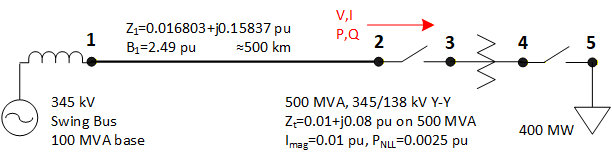
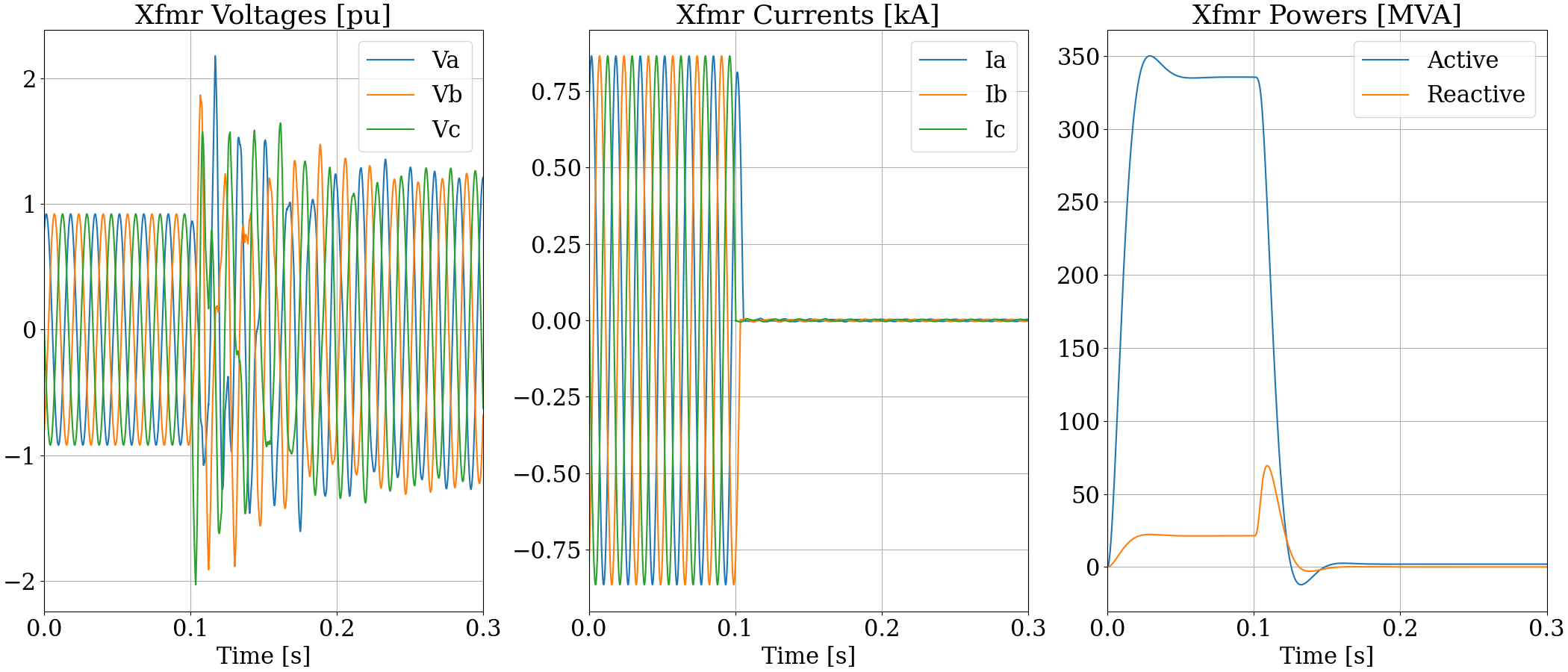
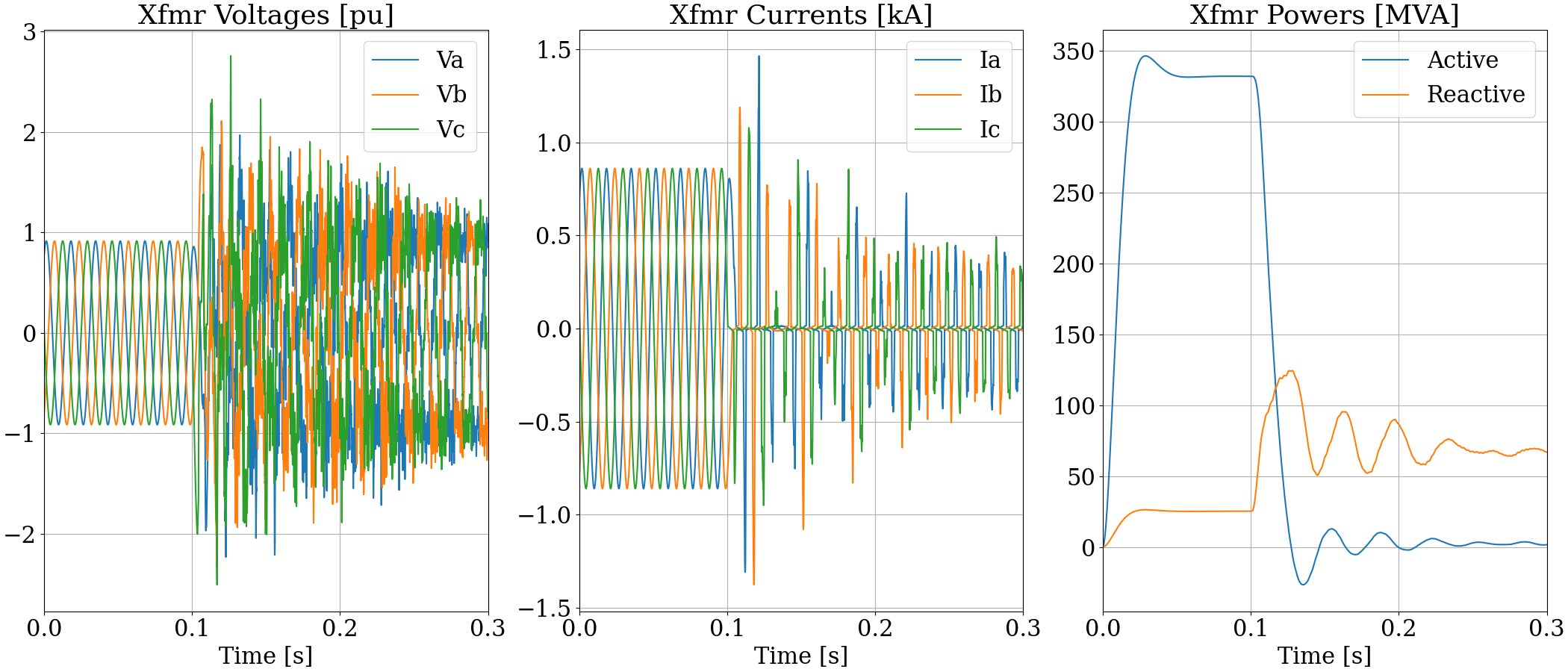
This example disconnects 400 MW of load from the end of a 500-km transformer-terminated line. It demonstrates the CIM extension for transformer saturation in the TransformerSaturation class. It does not require gfm_gfl_ibr2.dll to run in ATP. The first set of graphs represents a linear transformer and the second set of graphs represents a nonlinear transformer.
Linear Transformer Core
Saturating Transformer Core
IEEE 39-Bus
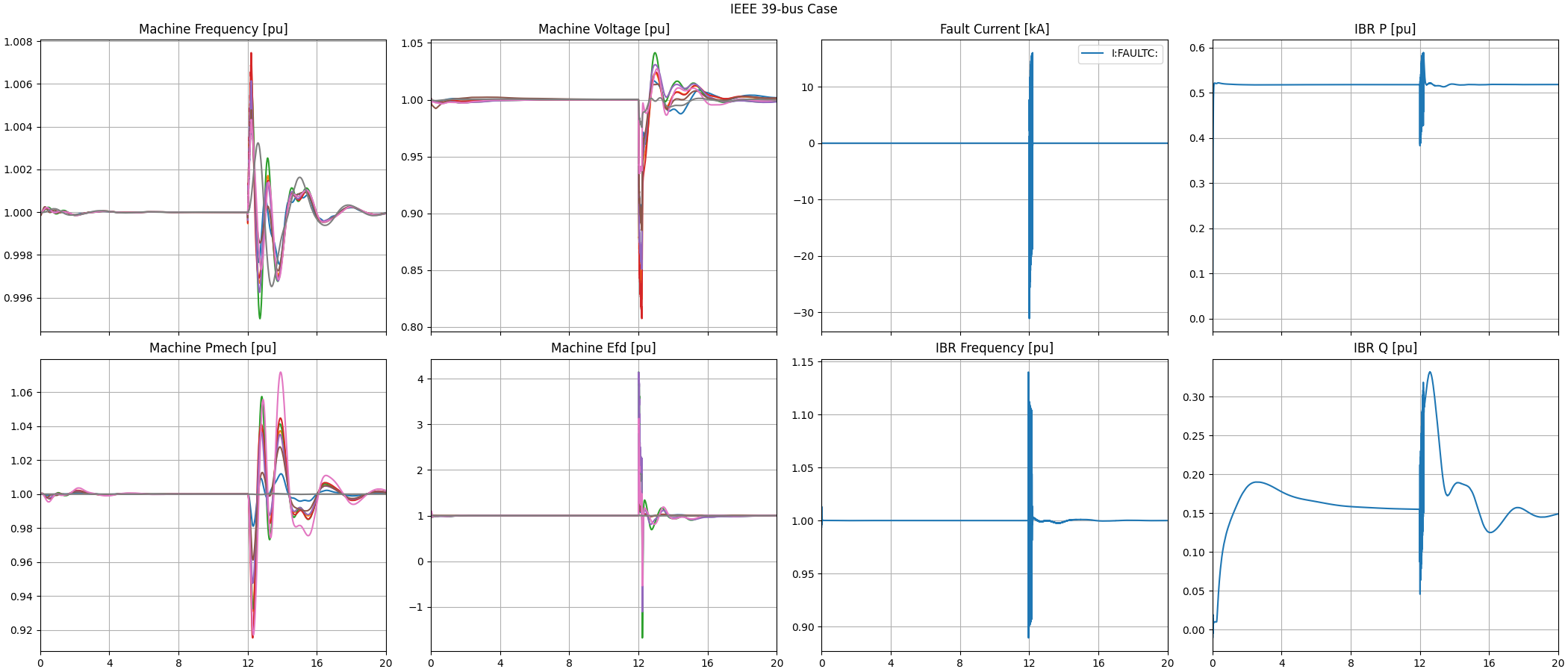
This example demonstrates a single-line-to-ground fault (SLGF) applied and cleared on the IEEE 39-bus test system, which is generally representative of New England. One of the original 10 machines has been replace with a solar plant. The purpose of this example is to demonstrate CIM extensions to remove the CIM Terminal class and the WECC dynamic models for IBR. This example does not require gfm_gfl_ibr2.dll to run in ATP.

IEEE 118-Bus
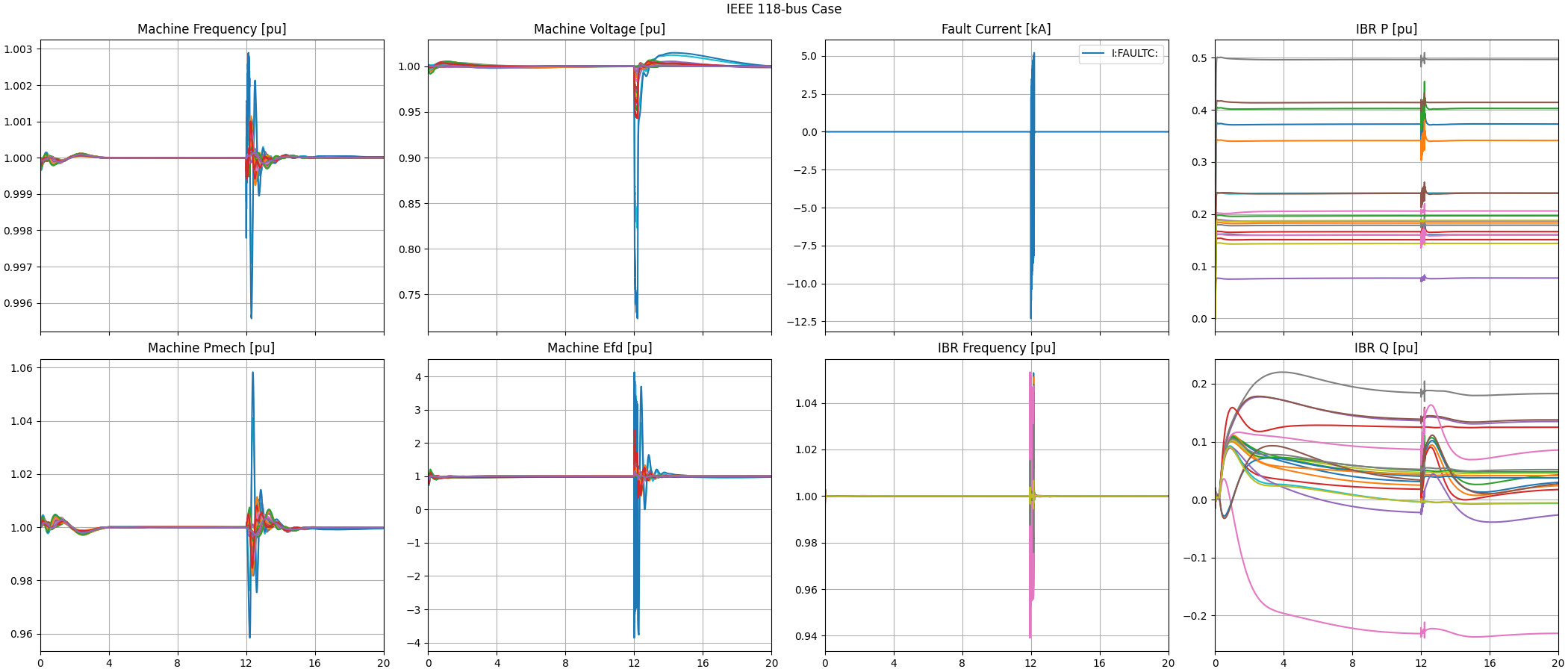
This example demonstrates a SLGF applied and cleared on the IEEE 118-bus test system, which is generally representative of the Midwestern United States circa 1962. This example has 193 buses so that each generator has its own generator stepup transformer (GSU), i.e., no generators are paralleled on the same bus. Several of the machines have been replaced with 14 solar and 5 wind plants, so this version of the test case includes 56 synchronous machines and 19 IBR. The purpose of this example is to demonstrate CIM extensions to remove the CIM Terminal class and the WECC dynamic models for IBR. This example does not require gfm_gfl_ibr2.dll to run in ATP. It does not require gfm_gfl_ibr2.dll to run in ATP.

WECC 240-Bus
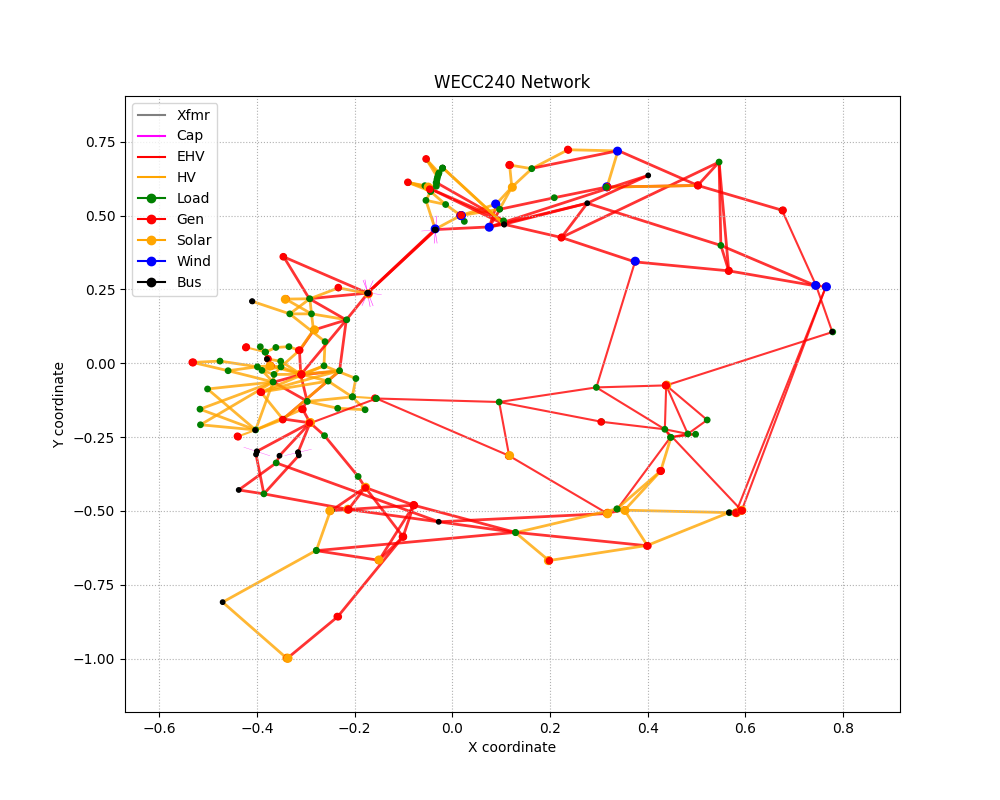
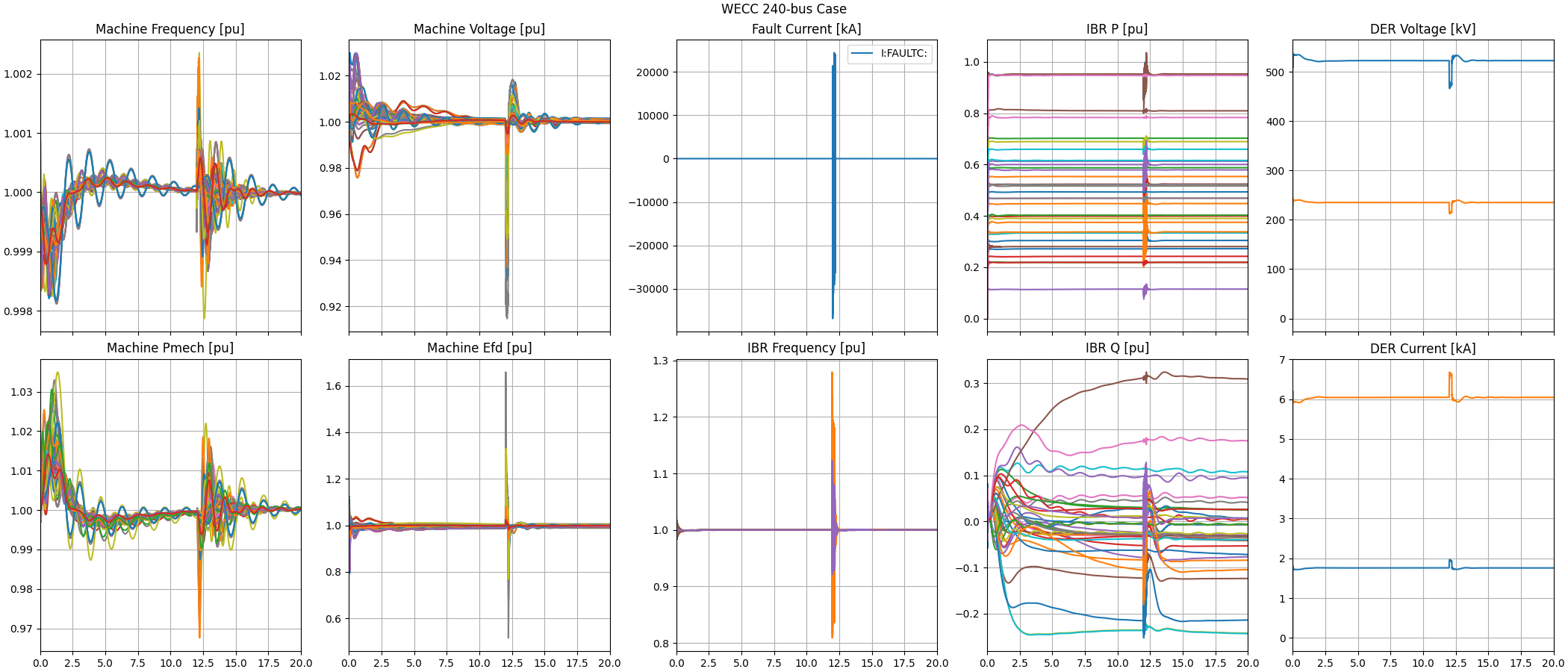
This example demonstrates a SLGF applied and cleared on the WECC 240-bus test system, which is generally representative of the Western United States. This version has 333 buses so that each generator has its own generator stepup transformer (GSU), i.e., no generators are paralleled on the same bus. It includes 105 synchronous machines and 35 IBR. The purpose of this example is to demonstrate CIM extensions to remove the CIM Terminal class and the WECC dynamic models for IBR. This example does not require gfm_gfl_ibr2.dll to run in ATP.
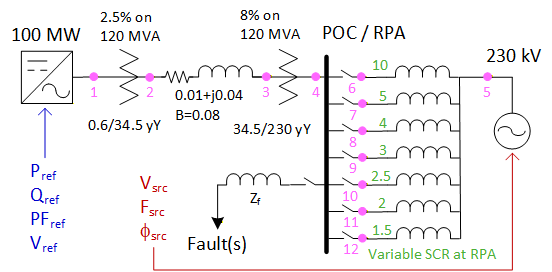
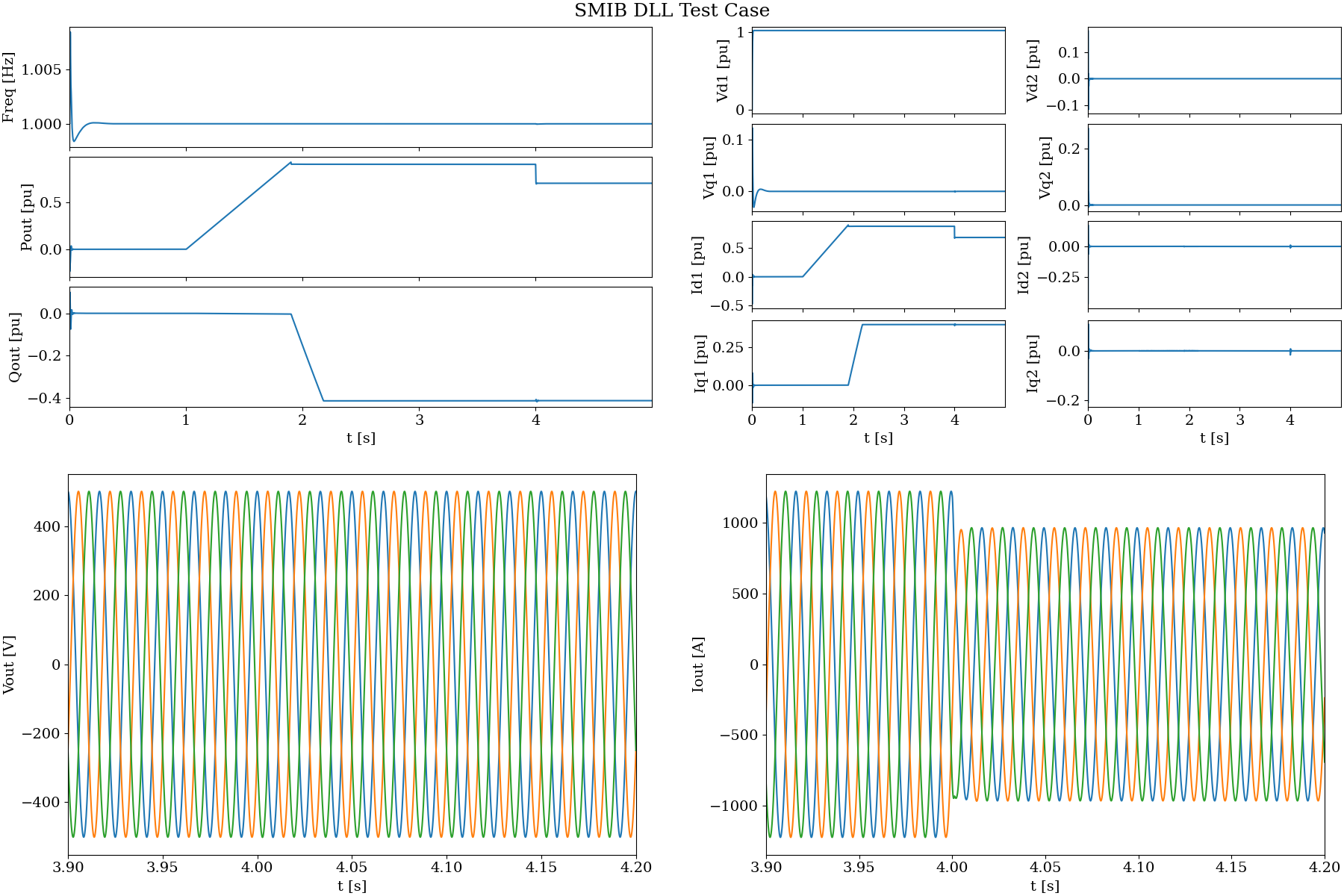
SMIB DLL
This result comes from the EPRI generic grid-forming inverter model, implemented in a DLL compiled from C code. It is sized at 100 MW and connected to a single-machine, infinite-bus (SMIB) grid with adjustable short-circuit ratio (SCR). The example shows the DLL starting up, in preparation for a transient event to be applied at t=4.0 seconds. It requires gfm_gfl_ibr2.dll to run in ATP.